
An old Indian ritual, made the way it was meant to be made
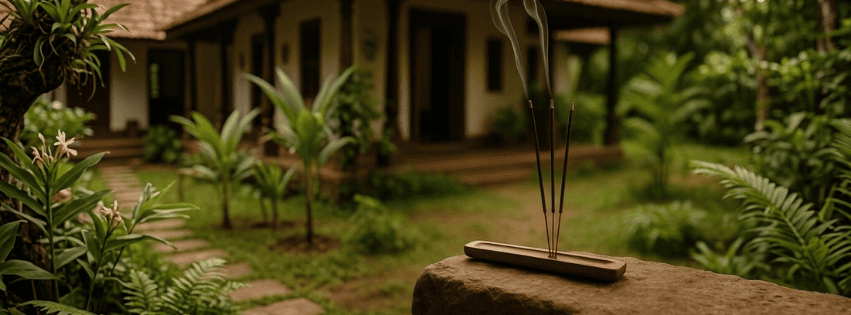
For thousands of years, incense has been part of how Indian homes begin a day, mark a moment, or close one. A small flame, a thread of smoke, and the room becomes a different kind of space. It's one of the oldest fragrance rituals on earth and somewhere along the way, much of it was quietly replaced. Walk down most incense aisles today and what you're really buying is a bamboo stick dipped in synthetic fragrance oil and chemical binders. It burns. It smells loud. But the scent is flat, the smoke clings, and the experience is closer to a room spray than a ritual.
At OpenEgo, we make incense the way it was meant to be made hand-rolled in Bengaluru, from 100% botanical ingredients, with no synthetic aroma chemicals, no phthalates, no parabens, no artificial fixatives. We call them Healing Sticks, because that's the work they're designed to do. Here's why that distinction matters.
What "natural" actually means
A truly natural incense stick is built from things that grew. The base is a careful blend of:
- Resins like frankincense, myrrh, benzoin and guggul
- Woods such as sandalwood, agarwood and cedar
- Herbs and flowers — tulsi, lavender, rose, vetiver
- Natural binders like makko powder, in place of glue or saltpeter
That's it. No synthetic musks pretending to be flowers. No fixatives engineered to extend a smell past the point where it should have softly faded. Just botanicals, blended with intention and rolled by hand.
It's a slower, more expensive way to make incense. It's also the only way to make incense that does what incense is supposed to do.
A cleaner burn
The biggest difference between synthetic and natural incense isn't the scent — it's what happens to the air around you.
When synthetic fragrance oils combust, they release volatile compounds that can leave a heavy, headachey quality in the room. It's the same reason a long session with a cheap stick can leave your throat feeling scratchy and your curtains smelling stale for days.
Pure botanicals burn differently. The smoke disperses instead of clinging. Surfaces don't build up that faint film over time. And the air, when the stick has finished, simply feels lighter — not loaded with something your lungs have to work around.
This is why so many of our customers tell us the same thing: I used to get headaches from incense. With these, I don't.
A scent with depth
Synthetic fragrance is designed to hit hard and read instantly. "Sandalwood." "Lavender." "Jasmine." Recognisable, but one-dimensional — a caricature of the real thing.
Natural incense behaves more like a living fragrance. It opens with one note, settles into another, and dries down into something quieter that lingers for hours. Real sandalwood smells the way a forest smells: layered, slightly sweet, slightly resinous, with edges you don't quite have words for. It changes as it burns. It interacts with the room, with the weather, with you.
This is the heart of what we mean by fragrances that evolve. A synthetic scent stays static. A botanical one unfolds.
The calm is built in
Frankincense. Sandalwood. Vetiver. Oud. These materials have been at the centre of meditation, prayer and rest in Indian tradition for thousands of years, and not by accident. The vedic scent sciences understood something modern wellness is only beginning to articulate: certain natural aromatics genuinely shift the nervous system. They slow the breath. They soften attention. They cue the body that it's time to settle.
We design each of our Healing Sticks around a specific intention — to calm, to focus, to rest, or to ground. The blend isn't decorative. It's the point.
Lighting one becomes a small, deliberate act in a day full of automatic ones. A pause that asks nothing of you except to notice it.
How to choose a natural incense stick
A few honest tells, whether you're shopping with us or anywhere else:
- Read the ingredients. If it just says "fragrance" or "perfume," it's almost certainly synthetic. Real incense names its botanicals.
- Smell the unlit stick. A natural stick smells quietly of wood, resin and earth. A synthetic one already smells strongly of "perfume" in the pack.
- Notice the colour. Earthy browns and greys are usually a good sign. Bright, uniform neon shades typically mean dye.
- Look for hand-rolled or masala-style sticks. These are built from a dough of herbs and resins, not dipped after the fact — and that's where real depth lives.
- Expect to pay a little more. Genuine resins and woods aren't cheap raw materials. Pricing reflects what's actually inside.
A ritual worth keeping
We've outsourced so much of our sensory life to screens that it's easy to forget how much a single, well-made scent can change a room. Natural incense is one of the oldest, most low-tech ways to make a space feel cared for. No app. No subscription. A match, a stick, and a few minutes of quiet.
That's what OpenEgo is built around — bringing the depth of ancient Indian scent sciences into homes that need a little more grounding, and a lot less synthetic.
Light one tonight. Put your phone down. Notice what shifts.
